This post contains paid and/or affiliate links. I make a small commission at no extra cost to you. Please see our Privacy Policy.
Puppies act like tiny bottomless pits with paws. They eat, nap, zoom, repeat—and it’s adorable until you realize you’re the one managing the meal schedule. So, how many times a day should you actually feed your puppy?
Table of Contents
Short answer: more than you think, but not constantly. Let’s break it down so your pup grows strong and you don’t lose your mind.
Why Meal Frequency Matters
Puppies grow fast. Like, “grow out of a collar in two weeks” fast.
Their bodies burn energy at warp speed, so they need steady fuel to keep up—and to avoid the hangry zoomies. Consistent meals help with:
- Stable energy: No sugar crashes or sleepy slumps.
- Healthy growth: Bones, muscles, and brain development need nutrients on schedule.
- Better potty training: Predictable meals mean predictable bathroom breaks.
- Happier tummies: Smaller, frequent meals reduce bloating and vomiting from overeating.
How Often to Feed by Age
Think of meal frequency as a sliding scale. The younger the puppy, the more often they eat. Then you taper down as they grow.
- 8–12 weeks: 4 meals per day
- 3–4 months: 3–4 meals per day (most do great on 3)
- 5–6 months: 3 meals per day
- 6–12 months: 2–3 meals per day
- 12+ months: 2 meals per day (most adults)
Small vs.
Large Breeds
Size changes the game a bit.
- Toy/small breeds: They burn calories fast and can get low blood sugar, so stick with more frequent meals longer (3–4 meals until 6 months).
- Large/giant breeds: They need controlled growth. Aim for 3 meals until 6 months, then 2–3. Don’t overfeed—slow and steady wins the joint-health race.
How Much Food Per Meal
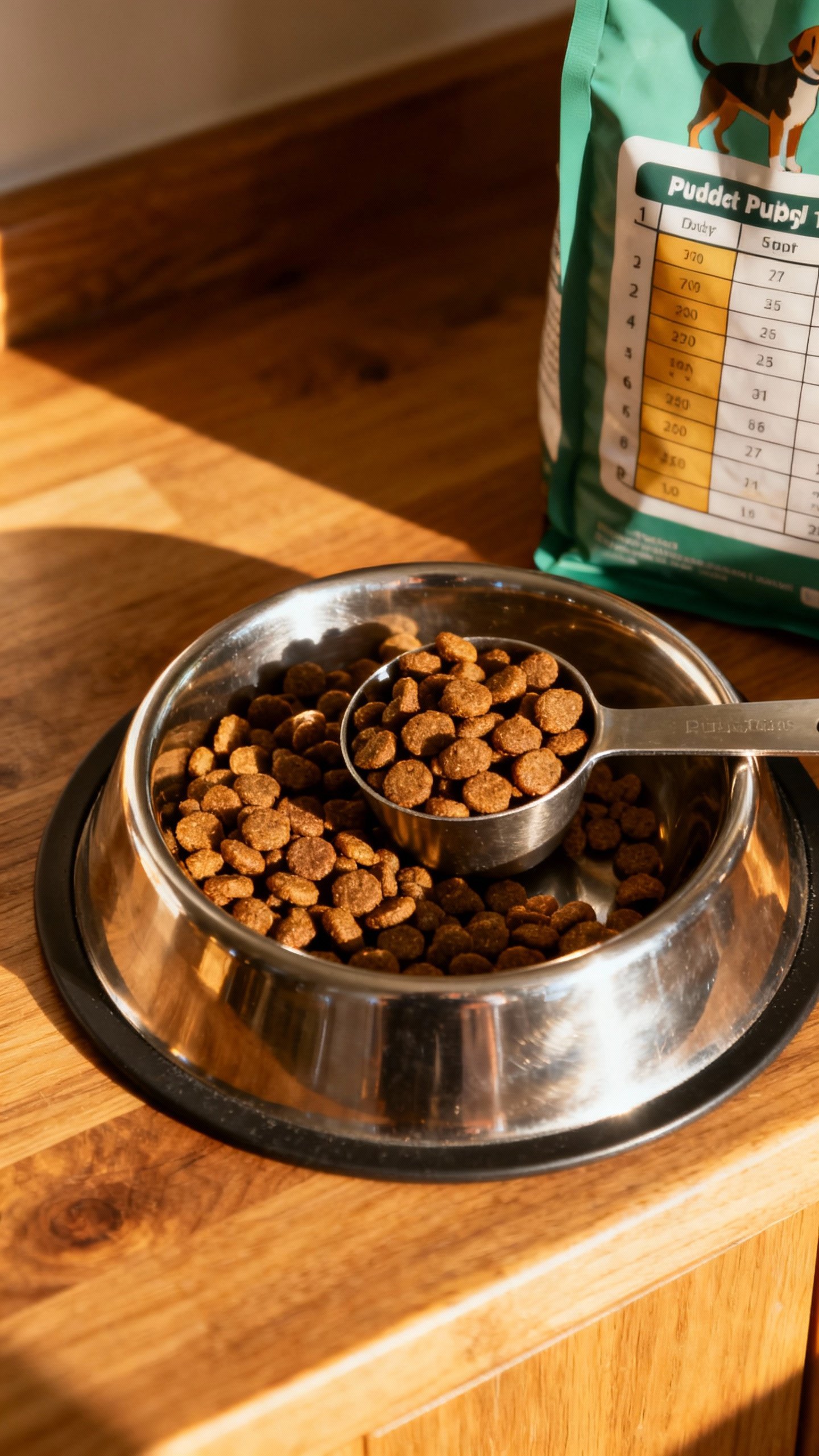
Your bag of puppy food includes a feeding chart.
Start there. Then adjust based on your puppy’s body condition and hunger/cues. General approach:
- Find the total daily amount from the bag for your pup’s age and weight.
- Divide it by the number of meals you’re feeding.
- Monitor your pup’s shape and energy for 1–2 weeks, then tweak by 10–15% as needed.
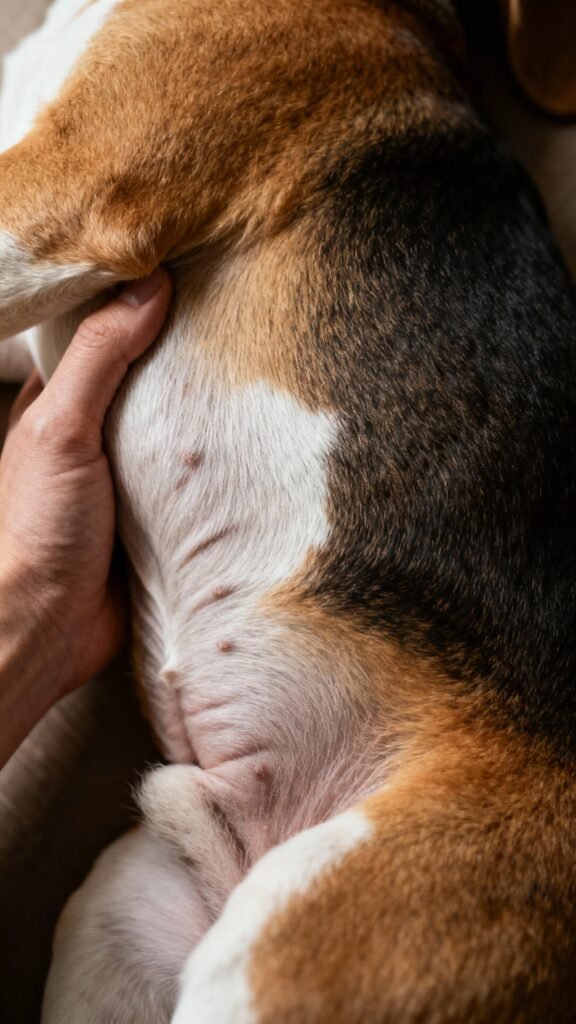
Body Condition Check (The “Pet and Peek” Test)
- Ribs: You should feel them easily under a thin layer of fat, not see them poking out.
- Waist: Visible from above like a gentle hourglass.
- Tummy tuck: Slight upward tuck from ribs to hips when viewed sideways.
If your pup looks barrel-shaped or you need a map to find ribs, cut back a bit. If ribs are popping and energy is low, bump up the calories.
Building a Daily Feeding Schedule That Works
Routine equals sanity—for you and your puppy.
Space meals evenly and link them to predictable potty breaks. Sample schedules:
- 4 meals (8–12 weeks): 7am, 11am, 3pm, 7pm
- 3 meals (3–6 months): 7am, 12pm, 6pm
- 2 meals (6–12+ months): 7am, 6pm
Timing Tips
- Offer water throughout the day—but limit right before bedtime to reduce midnight bathroom tours.
- Avoid hard exercise right before and after meals (especially large breeds). FYI, this helps reduce bloat risk.
- If your pup begs between meals, use part of their daily kibble for training. Same calories, better manners.
Switching Meal Frequency as Your Puppy Grows
You won’t wake up one day and magically switch from four meals to two.
You’ll phase it. Two easy methods:
- Consolidate: Combine two smaller meals into one slightly larger meal.
- Stretch the gaps: Gradually increase the time between meals until you naturally drop one.
Signs Your Puppy Is Ready to Drop a Meal
- They ignore or pick at one meal consistently.
- They maintain weight and energy easily.
- They sleep through the night without tummy rumbles or early wake-ups.
If you drop a meal and your pup turns into a gremlin by 3pm, IMO, add it back for a couple more weeks.
Wet, Dry, Raw, Oh My: Does Food Type Change Frequency?
Not really. Frequency stays roughly the same regardless of food type. But portion sizes and calorie density vary a lot. Quick pointers:
- Dry (kibble): Calorie-dense and convenient.
Measure carefully.
- Wet: More volume for fewer calories. Great for picky eaters or those who need more hydration.
- Fresh/frozen/raw: Follow the brand’s feeding guide and your vet’s advice. Balance matters—don’t wing it.
Treats and Training Snacks
Keep treats under 10% of daily calories.
Use kibble as training rewards to avoid calorie creep. Your future adult dog’s waistline will thank you.
Special Cases You Should Know
Because puppies never read the handbook.
- Very small puppies (under 3 lbs): They can get low blood sugar fast. Feed small meals more frequently and keep high-calorie paste on hand if your vet recommends it.
- Rescue pups or those underweight: Feed frequent, nutrient-dense meals and increase calories gradually to avoid tummy upsets.
- Post-vaccine or post-surgery: Appetite may dip briefly.
Offer smaller, more frequent meals and call your vet if it lasts more than a day.
- Sensitive stomachs: Stick to a consistent diet. Change one thing at a time and give it a week before judging.
FAQ
Can I free-feed my puppy?
You can, but I wouldn’t. Free-feeding often leads to overeating, unpredictable bathroom breaks, and weight gain.
Measured meals teach routine and make training easier. Plus, you can spot changes in appetite faster if something’s off.
What if my puppy skips a meal?
If your pup skips one meal but acts normal, no panic. Puppies get distracted or full sometimes.
If they skip two meals in a row, seem lethargic, vomit, or have diarrhea, call your vet. Trust your gut—literally and figuratively.
How late should the last meal be?
Aim for 2–3 hours before bedtime. Then take them out to potty.
That timing gives you the best shot at an uninterrupted night. No guarantees, because puppies.
Do I need a puppy-specific food?
Yes. Puppy formulas include more protein, fat, and micronutrients for growth. Large-breed puppies need large-breed puppy food to control calcium and growth rates.
This matters for joint and bone health, FYI.
When do I switch to adult food?
Most small/medium breeds switch around 12 months. Large breeds around 12–18 months, giant breeds up to 24 months. Transition gradually over 7–10 days to avoid digestive drama.
Should I add supplements?
Usually, no, if you’re feeding a complete, balanced puppy diet.
Extra calcium for large breeds, for example, can do more harm than good. Ask your vet before adding anything fancy. Fish oil for skin/coat can help, but do it right.
Bottom Line
Feed your puppy small, frequent meals based on age: four meals early on, then three, then two as they grow.
Watch their body condition, energy, and appetite, and adjust by small increments. Keep treats reasonable, stick to a routine, and don’t overthink every hiccup. Raise a happy eater now, and you’ll have a healthy adult dog later—without needing a spreadsheet to survive mealtime.
IMO, that’s a win.
This post contains paid and/or affiliate links. I make a small commission at no extra cost to you. Please see our Privacy Policy.