This post contains paid and/or affiliate links. I make a small commission at no extra cost to you. Please see our Privacy Policy.
Puppies don’t read calendars. They chew them. But you still need a routine that keeps your sanity intact and your pup on track. The secret? A schedule that’s consistent, flexible, and actually fits your real life—not some fantasy where you wake up at 5 a.m. smiling.
Let’s build one that works, without turning your day into a military operation. “How to Create A Puppy Schedule that Works.
Table of Contents
Start With the Big Rocks: Potty, Food, Sleep, Play

Your puppy’s day revolves around four pillars.
Nail these and everything else gets easier.
- Potty breaks: Puppies can usually hold it about one hour per month of age (up to ~4 hours). Set alarms. Seriously.
- Food: Feed 3 meals a day for most pups under 6 months.
Keep timing consistent to help predict potty needs.
- Sleep: Expect 16–20 hours of sleep daily. Over-tired pups get bitey and chaotic—like tiny, fuzzy toddlers.
- Play/training: Short, frequent bursts beat one long session. Think micro-workouts.
Sample Daily Rhythm (Adjust to Your Life)
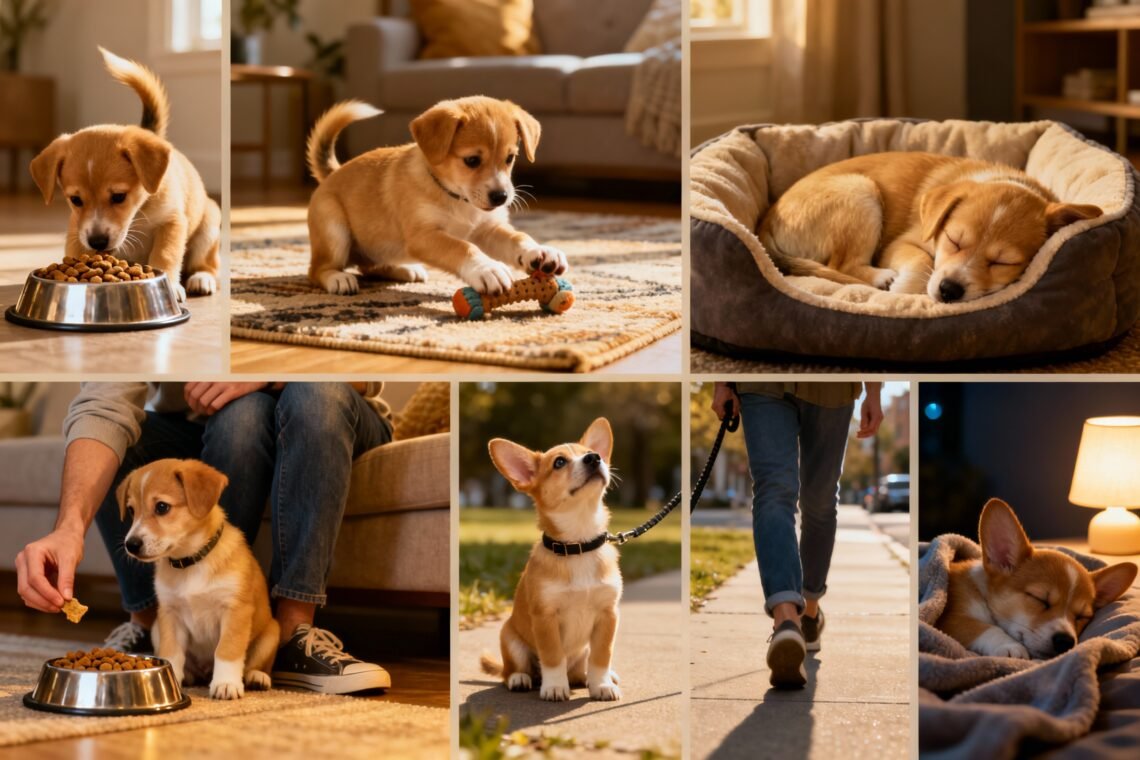
- 6:30 a.m. – Wake, potty immediately
- 7:00 a.m. – Breakfast, potty after
- 7:30–9:00 a.m. – Play/training, then nap
- 10:00 a.m. – Potty + short walk or sniffari
- 12:00 p.m. – Lunch, potty after
- Afternoon – Play, training, nap cycles every 2–3 hours
- 5:30 p.m. – Dinner, potty after
- Evening – Calm play, chew time, short walk, last potty
- Bedtime – Final potty, crate/pen sleep
FYI: This isn’t a law.
Treat it like a framework, not handcuffs.
Potty Like a Pro: Timing and Triggers
Your secret weapon? Predictability. You control the schedule; your puppy controls the bladder.
- Always go after: waking, eating, drinking, playing, training, and before/after crate time.
- Use a cue: Pick a phrase like “go potty” and say it once.
Then wait. No pep talks.
- Celebrate the wins: Praise calmly and treat within 2 seconds.
- Handle accidents smartly: Clean with enzymatic cleaner. No scolding.
Adjust the schedule tighter.
Nighttime Strategy
- Set one or two alarms for young pups. Take out quietly—no play, no chatting.
- Keep lights low and return to the crate immediately after.
- Stretch intervals by 15 minutes every few nights as your puppy succeeds.
Food and Water: The Schedule That Saves Your Floors
Feeding on a schedule trains the digestive system. You’ll get predictable potty windows and fewer “surprises.”
- Meals: 3x daily until 6 months, then shift to 2x.
Stick to roughly 12-hour spacing for two-meal days.
- Water: Offer freely during the day, then taper 1–2 hours before bedtime to reduce overnight needs.
- Slow feeders: Great for gulpers and boredom. Mental work + food = bliss.
Treat Math (So You Don’t Overfeed)
- Keep treats to ~10% of daily calories.
- Break high-value treats into pea-sized bits. Your pup doesn’t measure; they just care that it’s tasty.
- If training a lot, reduce meal portions slightly to balance.
Sleep: The Routine Most People Skip (Don’t)
If your puppy turns into a land shark by 6 p.m., they need more naps.
Overstimulation looks like disobedience, but it’s fatigue.
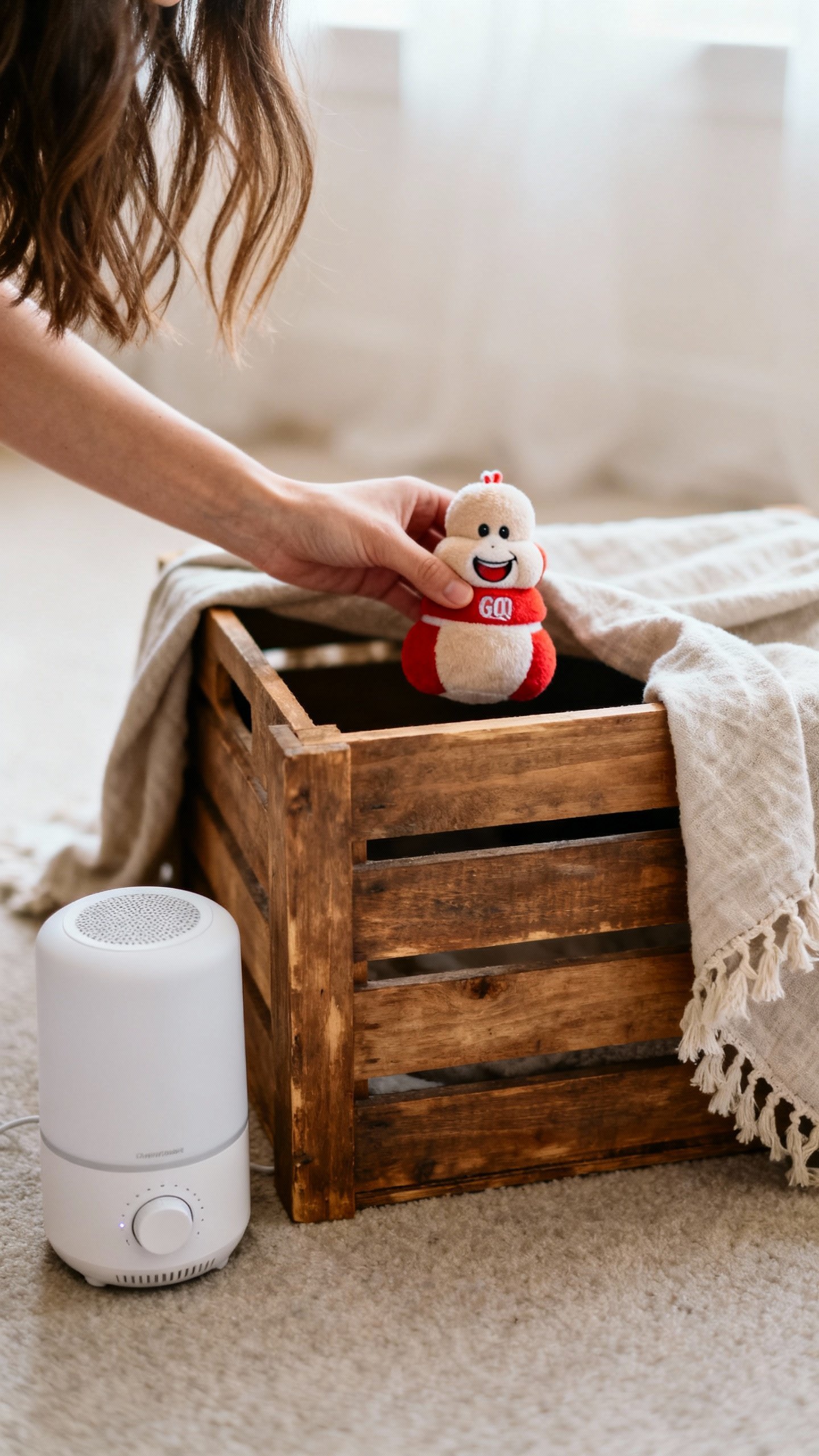
- Use a crate or playpen: Schedule naps every 2–3 hours for 60–90 minutes.
- Pre-nap wind-down: Potty, calm sniffing, gentle petting. Dim the lights, cut the chaos.
- White noise: Helps block household sounds. Yes, your dishwasher ruins naps.
Crate Training Without Tears
- Start with 5–10 minutes while you’re nearby.
Drop a stuffed Kong or safe chew.
- Increase in small increments. Release while quiet, not after a meltdown.
- Cover the crate partially if your pup gets FOMO. Not a cave—just cozy.
Training and Play: Tiny Bursts, Big Wins
You’ll get better results with short reps more often.
Think: commercial-break training.
- 5-minute sessions: 3–5 times daily. Focus on name recognition, sit, down, come, drop it, and place.
- Energy outlets: Tug, fetch, flirt pole, puzzle feeders. Rotate toys to keep novelty high.
- Sniffari walks: Let them sniff.
It’s the puppy internet. Mental work tires them out more than sprinting laps.
Bitey Time Survival Kit
- Have 2–3 safe chews handy. Redirect quickly when nipping starts.
- End sessions before they spiral.
Nipping usually means “I’m tired” or “I’m overstimulated.”
- Teach “settle” on a mat with calm rewards. Gold for evenings.
Socialization: Schedule the Right Kind of “New”
You don’t need to meet 100 dogs. You need 100 controlled, positive experiences.
Quality over chaos.
- Plan 1–2 new exposures daily: surfaces, sounds, people with hats, umbrellas, bikes, gentle dogs, car rides.
- Keep it brief and positive: If your pup looks worried, create space and reward curiosity.
- Vet advice first: Follow your vet’s guidance on safe socialization before full vaccinations.
Red Flag Check
- Tail tucked, cowering, freezing, or avoidance = too much, too fast.
- Dial it back. Smaller dose, more distance, better treats.
Make It Flexible: Weekday vs. Weekend Reality
Perfect schedules die on Mondays.
Build one that bends.
- Anchor events: Keep wake time, meals, and bedtime consistent within 30–60 minutes.
- Buffer blocks: Use 10–15 minute windows for potty and training to absorb chaos.
- Tag-team tools: Dog walker, neighbor check-ins, or a snuffle mat + crate time when work gets wild.
When Life Goes Off the Rails
- Missed potty? Take them out immediately, then resume the rhythm.
- Bad day of accidents? Tighten intervals for 48 hours.
You’ll rebound fast.
- Travel? Bring familiar chews and keep meal/potty timing as steady as possible.
Track It (Briefly) So You Can Drop It
Yes, I know, tracking sounds extra. But a few days of notes can save you weeks of guessing.
- Log for 3–5 days: meals, water, potty times, accidents, naps, training.
- Find patterns: If accidents happen at 3 p.m., add a 2:30 potty break.
Boom—problem solved.
- Then simplify: Once predictable, ditch the log and keep the routine.
FAQ
How often should I take my puppy out at night?
Plan on 1–2 nighttime potty trips for young pups. Set alarms based on age (every 3–4 hours for very young puppies), then extend by 15 minutes every few nights as they succeed. Keep it sleepy and boring, and they’ll learn that nighttime is for rest.
What if my puppy refuses to nap?
Overtired puppies act wired, not yawny.
Use a crate or pen, add white noise, and give a calm chew after a potty break. If they protest, wait for a quiet moment before you let them out. Consistency teaches them that downtime happens, period.
Can I free-feed my puppy?
IMO, scheduled meals beat free-feeding for potty training and predictability.
You’ll know when to expect bathroom breaks, and you can adjust portions more easily. If your vet recommends free-feeding for medical reasons, pair it with more frequent potty trips.
How long can I leave my puppy alone?
Short stretches only, and always match it to their bladder capacity and crate training level. Use a pen with a bed, water, and safe chews if you’ll be gone longer than they can hold it.
A midday potty break from a trusted person helps a ton during the workweek.
My puppy keeps biting. Is my schedule the problem?
Often, yes. Biting usually spikes when puppies feel tired, bored, or overstimulated.
Add a nap, shorten play sessions, offer better chews, and train a quick “settle” or “place” routine. Also, don’t wrestle with your hands—use toys!
When can I switch to two meals a day?
Most puppies transition around 6 months, but check with your vet based on breed and growth. When you switch, keep potty breaks steady for a week while their digestion adapts.
If accidents return, go back to 3 meals briefly.
Conclusion
A puppy schedule that actually works feels simple, not strict. You’ll anchor the big stuff—potty, meals, sleep—and flex the rest. Watch your pup’s patterns, adjust in small steps, and celebrate the tiny wins.
Do that, and you’ll raise a calmer dog—and keep your shoes, carpet, and sanity intact. IMO, that’s a solid trade.
This post contains paid and/or affiliate links. I make a small commission at no extra cost to you. Please see our Privacy Policy.