This post contains paid and/or affiliate links. I make a small commission at no extra cost to you. Please see our Privacy Policy.
Your dog doesn’t care that you just mopped. Those paws? Nature’s Swiffers—collecting mud, grass, and mystery gunk with Olympic enthusiasm.
Table of Contents
The fix isn’t yelling “PAWS!” from the kitchen. It’s a great entrance mat that does the dirty work before the mess hits your floors.
Why a Dog Entrance Mat Is the Unsung Hero
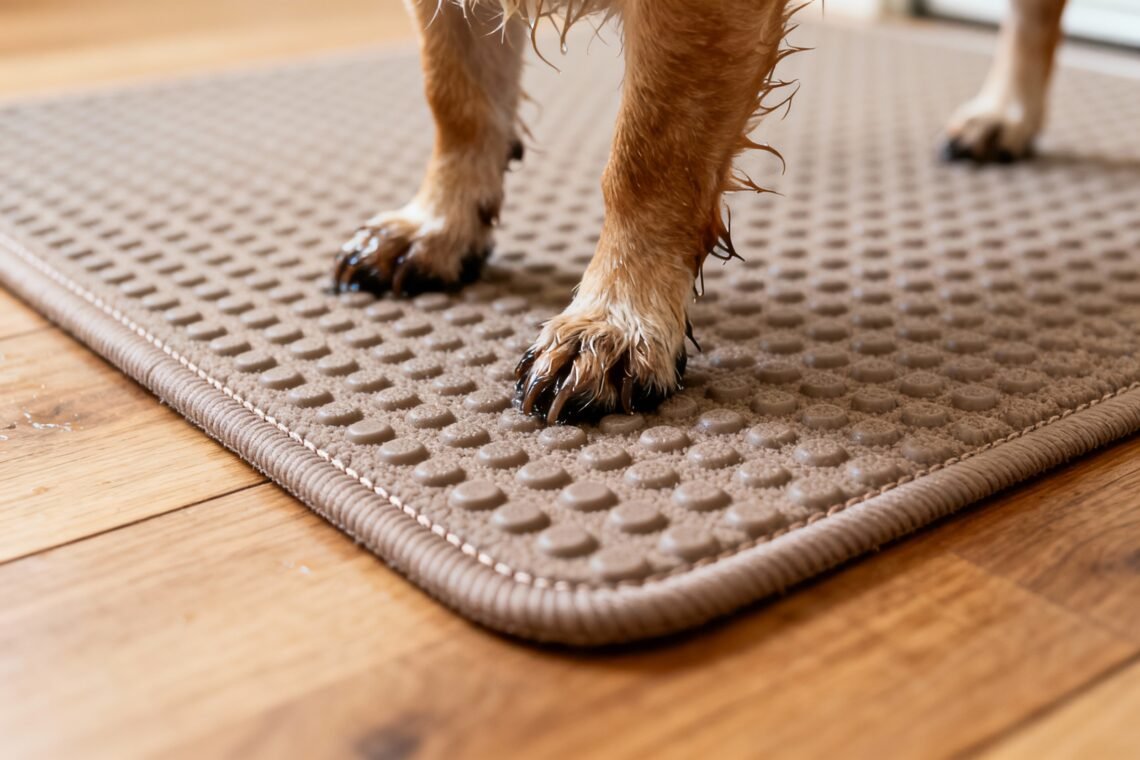
A solid dog entrance mat saves your floors, your sanity, and your mop bucket. It traps dirt, absorbs moisture, and gives your dog a spot to pause before they blast inside like a tiny, muddy tornado.
Also, it’s a vibe check for your entryway—functional and not ugly? Yes please. Bottom line: a good mat means fewer footprints, fewer bath-time negotiations, and more chill walks even when it’s gross outside.
What Makes a Dog Entrance Mat “Must-Have”
You don’t need a “pet-specific” label to win. You need the right features.
Look for:
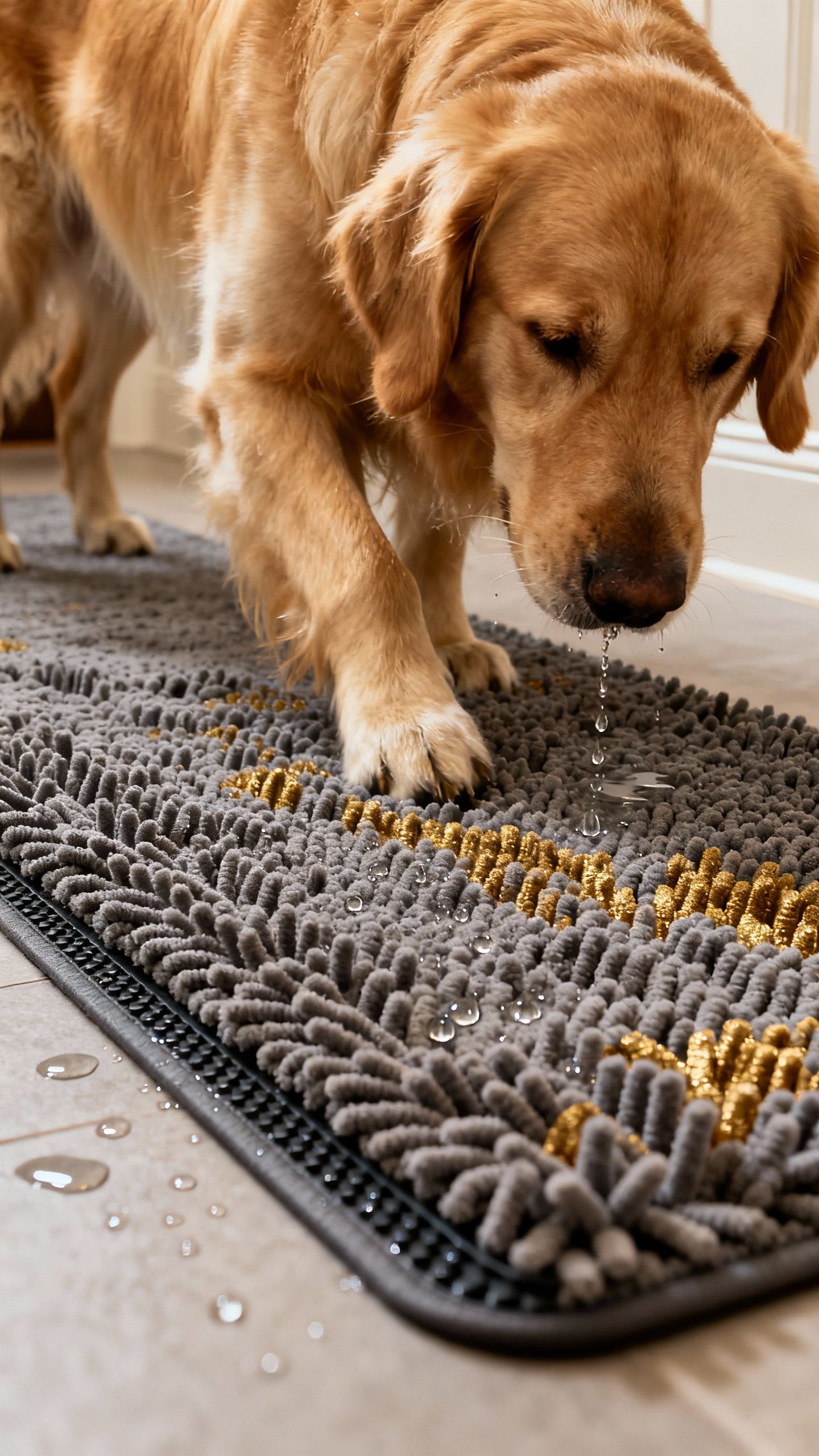
- High absorbency: Microfiber and chenille mats drink up water like champs.
- Dirt trapping texture: Ridges, thick piles, or rubber cleats catch debris from paws and pawsitive chaos.
- Non-slip backing: Rubber or grippy TPR keeps the mat planted when zoomies hit.
- Easy cleaning: Machine washable = chef’s kiss. Hose-off rubber mats = also great.
- Durability: Heavy-duty edges and stitching fend off chewing and frayed corners.
- Right size: Big enough for your dog to take 2–3 steps on it. Yes, size matters here.


Materials That Actually Work
- Chenille microfiber: Super absorbent, soft, and fast-drying.
Ideal for wet climates.
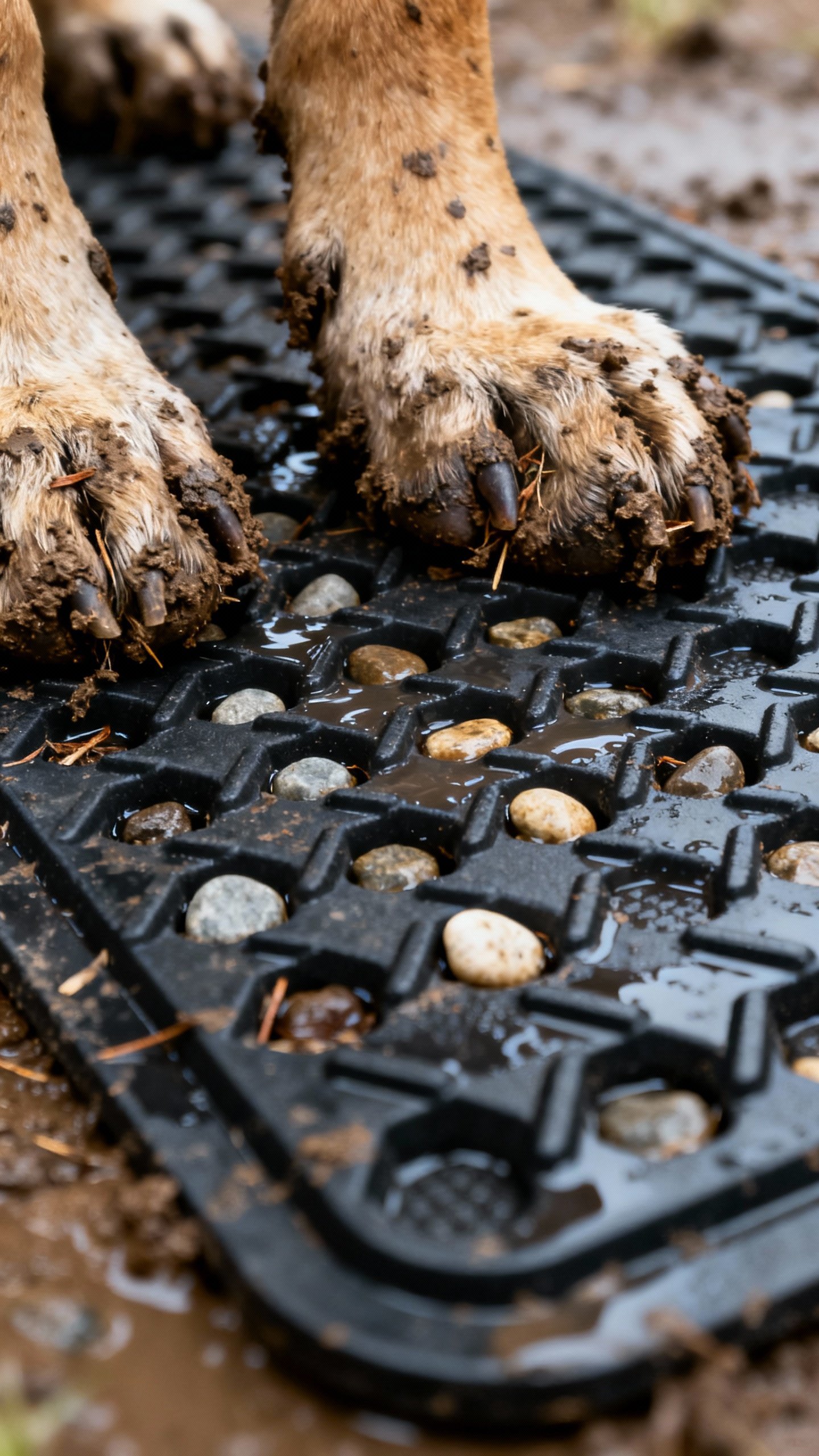
- Rubber scraper mats: Amazing for mud and snow clumps; less absorbent but ultra-tough.
- Coir (coconut fiber): Natural, scrubby texture; great for scraping, not great for puddles.
- Indoor-outdoor polypropylene: Balanced option—decent scraping, easy to hose clean.
Choosing the Right Mat for Your Dog and Home
Different dogs, different chaos. Match the mat to the mess and your style.
If your dog loves puddles
Go chenille or thick microfiber. Look for deep pile and fast-dry claims.
Double up with a rubber boot tray underneath if your entry tends to flood.
If your dog is a mud missile
Choose a rubber scraper mat outside the door and a microfiber mat inside. The combo scrapes first, absorbs second. It’s a tag team.
IMO, this is the gold standard.
If your dog sheds like a snowstorm
Pick a mat with a tight, textured weave so hair doesn’t embed forever. Avoid Velcro-like fabrics that trap fur more than dirt—unless you enjoy vacuuming for sport.
If you have a small space
Try a runner-style mat in hallways. More steps on the mat = more dirt captured.
FYI, you can trim some rubber mats to fit.
Placement: Where One Mat Isn’t Enough
You don’t need to roll out a red carpet, but smart placement matters.
- Outside the door: A scraper-style mat to knock off mud and pebbles.
- Inside the door: An absorbent mat to catch the wet and the fine grit.
- High-traffic routes: Add a runner where your dog sprints after coming in—kitchen, hallway, or straight to the couch (traitor).
The Two-Mat Strategy
Outside scraper + inside absorber = fewer bath towels sacrificed to paw patrol. It looks intentional, works better, and keeps you from nagging “WAIT—PAWS!” every 10 seconds.
Care and Cleaning Without the Drama
Great mats help—clean mats help more. Keep it simple.
- Shake or vacuum weekly: Especially the inside mat.
Dirt builds up fast.
- Machine wash monthly: If the mat allows it. Cold water, gentle cycle, low heat or air dry.
- Hose off rubber mats: Quick scrub with mild dish soap, then drip dry.
- Rotate mats: Keep a spare so you’re never mat-less on rainy days. Murphy’s Law is real.
Pro Tip: Training Meets Mat
Teach a quick “pause” or “sit” on the mat after walks.
Toss a treat there a few times. Dogs learn “butt on mat = snack,” and you win precious drying seconds. Manipulative?
Yes. Effective? Also yes.
Styling Your Entry Without Losing Function
We can care about aesthetics and still battle mud.
Choose colors that hide dirt well—think charcoal, taupe, or heathered patterns. Patterns = camouflage for paw prints between washes. If you want a design moment, layer a thin patterned indoor rug under a rubber-backed absorbent mat to lock it in place and add texture.
Sizing Rules of Thumb
- Small dogs: 24″ x 36″ at minimum.
- Medium/large dogs: 30″ x 48″ or runner.
- Multi-dog households: Go runner or XL; you’ll thank yourself.
Top Types Worth Considering (No Brand Drama)
Not naming names, but here’s what works great in the real world:
- Microfiber chenille “shag” mats: Absorbs tons of water; washable; soft for seniors’ joints.
- Industrial-style rubber scraper mats: Heavy, grippy, unbeatable for mud and snow clumps.
- Polypropylene indoor-outdoor rugs: Weatherproof, hose-cleanable, good with sand/dust.
- Coir doormats with rubber backing: Excellent scraping; pair with an indoor absorber.
- Runner mats with low-profile edges: Ideal for door clearance and sprints to the kitchen.
Features That Feel Like Upgrades
- Waterproof backing: Saves wood floors from soak-through.
- Beveled edges: Less tripping, easier vacuum passes.
- Quick-dry fibers: Avoids that swampy smell.
- Odor control treatments: Helpful if your dog is part puddle, part swamp critter.
Budget vs.
Premium: What Actually Changes
You can absolutely win on a budget. Cheaper mats usually have thinner piles and basic backing, but they still do the job if you clean them regularly. Premium mats bring thicker fibers, heavier backings, and better edge stitching—all of which mean better performance and longevity.
IMO, if your climate is wet or snowy, splurge on the inside absorber and go budget on the outside scraper.
FAQ
How often should I wash a dog entrance mat?
Wash monthly for normal use, or biweekly in wet seasons. Shake or vacuum weekly to keep grit from grinding into your floors. If you smell “wet dog” near the door, that’s your reminder.
Can I use a regular doormat instead of a “pet” mat?
Yes.
Focus on features, not labels. Pair a scraper outside with an absorbent mat inside, and you’ll outperform most “pet-branded” options anyway.
What if my dog won’t stop jumping off the mat immediately?
Train a quick routine. Cue “wait,” take two beats, then reward on the mat.
You can also extend the mat with a runner so they log more steps before hitting clean floors. Treats are your best friend—besides the dog, obviously.
Will a mat stop all dirt?
No mat can defeat a determined mud monster 100% of the time. But the right setup slashes dirt and moisture by a lot—think less mopping, fewer bath fights, and cleaner rugs.
Do I need different mats for summer and winter?
Maybe.
Winter often needs heavier scraping and more absorbency. In dry summers, a lighter mat or just the scraper may be enough. Swap seasonally if your climate swings hard.
What size works best for large breeds?
Aim for at least 30″ x 48″ or a runner.
Big dogs move faster and carry more mud. Give them space to take a few steps and actually unload the mess.
The Takeaway
A must-have dog entrance mat isn’t glamorous, but it’s pure peace of mind. Combine a scraper outside with an absorbent inside mat, pick the right size, and clean them on a schedule.
You’ll cut down on chaos, protect your floors, and maybe retire that stack of “emergency towels” by the door. Your dog still brings the drama—your entry doesn’t have to.
This post contains paid and/or affiliate links. I make a small commission at no extra cost to you. Please see our Privacy Policy.